Archive for the ‘Editorial’ Category

h1

User-created greatness

August 10, 2010

Since it’s been a while, I figured it was time for an editorial. I’ve been thinking about writing on this subject a long time, so here goes.

For me, user-created content is one of the best things available on the internet. Blogs, fansites, forums and what have you. Personal insights into matters, thoughts and opinions – such as this one – on pretty much any subject you care to name. And as a reader you can comment, reply, take part in the discussion and be a part of a community. There are professionals, amateurs, dabblers, hobbyists, first-timers, last-timers, veterans, rookies…all sorts with different views and different things they bring to the table.

Most of my time (if you don’t include the endless idling on Facebook) on the internet is spent reading blogs and forums, learning new stuff, appreciating and commenting on the work of others, and of course subjecting my own output to similar scrutiny by other users. I can’t even begin to tell how much I’ve gleaned from all this. Countless links and discussions, an endless supply of information both useful and useless, both silly and serious.

As a blogger I’m trying my best to contribute. I aim to provide content that I would enjoy myself: reviews, inspiration, news and sometimes just a few bits and pieces to let people know that there’s an actual person writing this stuff.

Blogging is great fun. You get to give something to the mostly faceless mass of the community/communities you’re part of. The sheer thought of actually writing something interesting is probably what most bloggers dream of. For me, the best things I can hear are comments that tell me that my writings have been of use. Maybe someone has bought a book or seen a movie that I reviewed or used my painting tutorials. There are few things in the world that can beat that feeling of being useful. Isn’t that what most people want to feel like?

That brings me smoothly to commenting. People, if you read a blog post that you like, comment! You’ll be pretty much guaranteed to make a blogger’s day, especially if it’s a small blog. Who knows, your comment might be the one to save a blog sliding into oblivion or the one boosting a blogger to strive for even bigger and better things. The more I’ve blogged (this is post #82 since May 2009) the more I’ve learned to respect the work of others. Nowadays if I enjoy something that I see, I’m more than happy to let the creator know it. Every comment I receive on this site still makes me smile (apart from some crazy Swede calling me retarded, and even that makes me smile a bit nowadays), and there are some frequent commenters that I’m already viewing as friends even if I’ve never met them. If I’m not all wrong, I think I’ve replied to every single comment I’ve received.

It’s typical in posts like these to offer some tips on blogging, so who am I to differ. Here are mine:

If you are a blogger

  • Write when you feel like it. Some people will disagree with me on this, as they like doing their postings on a schedule. If you can do that, even better! My blogging depends a lot on my moods. I might write a blog once every three weeks, or three blogs in a week. Better to make a post you like writing, than force yourself to create something mediocre. Be mindful, though. The longer the hiatus, the harder it is to start again.
  • Elaborate. Instead of saying “I liked it”, tell the readers why. It’s not that much more work, but it’s that much more useful.
  • Don’t be afraid to provoke. It’s your blog, it’s your opinions. Don’t be an ass, though.
  • Reply when people comment, it’s polite.
  • Check your spelling. Noeone liks torreed txty writtn    liek dis evn IF IT contins an lut off inromation.
  • Check your layout. Two pages of text with no paragraph breaksislikereadingasentencewithnospacesorpunctuation Alltheinformationistherebutitsalotofworktowadethroughit. Pictures are fine too, as are appropriate uses of formatting. Don’t go overboard.
  • Don’t be afraid to advertise your blog a bit. Be careful though, it’s a thin line between providing people with news of interesting posts and spamming every message board every time you write something. Deliver the news to people you think might reasonably be interested. Surprisingly often people will thank you for pointing them to a new source of information.
  • Maybe most importantly: Write stuff that you would like to read. Chances are that other people will like it, too.

If you’re a reader

  • Comment, comment, comment. Bloggers want and need to know that what they write is read.
  • If you find a blog you like, subscribe to it. An RSS or Atom feed is a nifty internet thingy, that notifies you when a blog is updated. It saves you from constantly checking up on a blog and keeps you from forgetting that one blog where there was an interesting post a month back. Google Reader is a very easy online choice. A lot of blogs also provide you with email updates. It couldn’t be easier: just enter your email and the blog will send you a message whenever there’s something new available. Some blogs – this one for example – also provide a Facebook link. Just become a fan and you’re notified of updates in your feed.
  • Follow links in blogs, you might often stumble upon something you might not see otherwise. Like this video of an eldritch thunderstorm in Finland.
  • Check out the blogrolls on blogs. Bloggers will often point you in the direction of blogs and sites they like themselves. I recommend everything under the Other people header, there on the right.

That’s about it. Now go do your part.

h1

Unspiration

April 28, 2010

Ah, the joys of writing an hobby blog when you haven’t been doing anything even remotely connected to your hobbies. Instead of being down about it or posting a quick ‘n’ easy movie trailer post, I figured I’d explore the whole phenomenon some. Everyone loves editorials, don’t they?

For me, painting miniatures is very much a thing dependent on inspiration, which at any given moment you either have or haven’t. It’s very much like a mood swing thing: one day I”ll be thinking “oh, sweet, miniatures!” and spend an hour or six working on all that stuff on my desk and starting different projects. The next day – or rather the next month – I’ll lose interest. Not gradually, mind you, but just go cold turkey. It’s not that I start feeling bad about doing miniatures or getting in any way repulsed by the hobby, but it simply gets pushed way back in the priorities, so I’ll be thinking “oh, I should finish those models. I’ll just clean the flat and go jogging, do a little Facebooking and play some Mount & Blade first.” And what do you know, it’s 1 AM and “oh, I’m not going to start painting at this hour, but tomorrow!” Yeah, right.

Now, I’m a bit of a bipolar character and my relation to miniatures reflects this a lot. It’s almost like a switch that’s either on or off. When I’m really into it, I can – despite my rather slow painting – get pretty prolific and multitask a lot, sculpting this, painting that and assembling those. However, this enthusiasm does have its downside. As probably every single miniature hobbyist knows, minis are like crack or bacon. You just can’t get enough. What this means, that when the craze hits I tend to order just a few more, since I only have around a thousand or so waiting unpainted on the wardrobe shelves. This really isn’t a problem, though. I know that I’m in no hurry, and most of that stuff will get painted some day, but it is a bit funny. I blame the ease of internet shopping. Especially eBay has delivered me a ton of WHFB orcs, which I simply had to have. Even if I play WHFB maybe twice a year.

That brings me conveniently to gaming. Which I don’t do a lot. Come to think of it, I’ve probably played less than ten games during the last year. I get in a shot of WHFB every now and then, although the laborious task of setting up the tables and assembling the armies tends to put our group off frequently. To combat this I bought Fear & Faith to go with all of my vampires, zombies and werewolves. The problem with this? Ummmn. There actually isn’t one, come to think of it. For crying out loud, I should get a game on. Ok, the reason it got put on the back burner was the fact that I was very much into moderns when I bought it, and didn’t have a good modern table setup available. Of course I had grand plans for that too, but it fell into the “oh, I’ll just finish the kitchen renovation first” category. The renovation is long done, the table not yet started.

Gaming is important. Even if I’ve become much more of a collector than a gamer in the last few years, games still hold a very special place in this hobby for me. While I often think that games aren’t half as much fun as painting and collecting, every single time I play I game I will think “oh, this is really fun! Why don’t I do this more often?” Seriously. Every single time (apart from that WHFB game with the high elves destroying my army without ever leaving their hiding place behind a largish wood). Luckily, I now have the new Space Hulk game on the way. It’s very quick to set up, doesn’t require special gaming boards and I already have the painted miniatures I need for it. In other words, it’s perfect to kick start my gaming anew. After that a bit of Fear & Faith, maybe a werewolf hunt using my WHFB Empire troopers and terrain? After that..oh yes, the blog.

This, dear readers, is interesting. Writing this blog right now has actually rekindled my enthusiasm for minis and gaming. All I really needed was a good think about this wonderful hobby of ours. See? It comes and goes, often on a whim, and unspiration turns into inspiration.

I’m leaving for London and Cardiff in ten hours or so – just imagine my frustration about missing Salute by a very small margin! Anyone fancying a pint, a chat or simply a chance to say hi, feel free to send me an email.

h1

Getting all trendy

February 15, 2010

Do you want to be notified whenever there’s a new posting on Dawn of the Lead?

Does RSS equal WTF in your mind?

Are you loathe to receive email notifications?

Your worries are now over – if you’re on Facebook, anyway. I’ve started a fan page for DotL, where members will be notified of new posts. There might be other content from time to time as well. Click on the Facebook link below, come in and show your (possible) support!

h1

Love of the Dead

February 13, 2010

For Dawn of the Lead’s Valentine’s Day special I was thinking of writing an article called “How to get your significant other interested in wargaming”. The only thing that came to mind was “By lying”, so I decided to change the subject a bit.  So…

How to get your significant other interested in zombies?

This is probably a problem a lot of zombie fans run into every now and again. For some curious reason, many people – girlfriends, boyfriends, husbands, wives et al – are not in love with zombie culture. They might even not want to pick a zombie movie for Saturday night’s feature. You might hear such comments as

  • All zombie movies are the same. BRRAAAIIINS, BRAAIIINNS and then they just eat people.
  • I just think it’s silly. You know, walking corpses and all. Vampires are fine, though. Especially the sparkly ones.
  • Couldn’t we watch a movie with Ben Affleck and Sandra Bullock instead?

Familiar? It is for me. So, here’s a bunch of tips on how to trick guide your loved one into enjoying the one thing you hold dear.

Clothing

In all honesty, zombies aren’t really cool or hip. Except if you make them into cool and hip clothing. Such as these examples (click on the pics to enlarge or the names to buy):


Games

Games are a good way to bring a sceptic into the fold. If it works with kids, it should work with spouses. Now, Dead Rising, Resident Evil and Left 4 Dead might not be the most suitable. They’re all pretty deep in the whole zombie apocalypse scenario. Let’s try something a bit different:

Plants vs. Zombies is summed up brilliantly by the developers:

A mob of fun-loving zombies is about to invade your home, and your only defense is an arsenal of 49 zombie-zapping plants. Use peashooters, wall-nuts, cherry bombs and more to mulchify 26 types of zombies before they can reach your front door.

An excellent blend of cartoony zombies and addictive gameplay will bring your significant other just a bit closer to the world of the undead.

Infectonator! is a simple Flash game. The idea? Cause devastating chain reactions by launching a zombie infection into populated areas. Destroy civilization in 60 seconds. Highly addictive, with a notable “one more try” factor.

Zombies!!! (what’s with the exclamation marks here?) is a light beer & pretzels kind of game, where survivors try to get out of an infested city by reaching a helicopter. Only one can survive, and it quickly devolves into backstabbing and tripping one another. Great fun, in other words.

Movies

The two categories above are a good way to start, but when you really want to reel someone in – which you do – then movies are the way to go. Now, instead of just telling what movies to choose, I’m going to suggest different tactics to use.

  • Director familiarity: Honey, do you remember Trainspotting and The Beach? Danny Boyle actually directed this one movie called 28 days later, too. Want to check it out?
  • Actor familiarity: I can’t believe it, Zombieland has that girl from Little Miss Sunshine in it! And Bill Murray!
  • Theme familiarity: You liked the movie Outbreak didn’t you? This movie’s pretty much it, but the disease is just a bit worse.
  • Zombie factor playdown: Shaun of the Dead is not really as much a zombie movie as it is a romantic comedy, you know. And despite the gore, Braindead is actually a story of a young man’s struggle in today’s society.
  • Intellectual challenge: As a matter of fact, Romero’s original Dead trilogy is a nihilistic view of mankind’s incapability to work together. Night of the Living Dead had a black leading character, which was remarkable in 1968. Dawn of the Dead is a scathing critique of consumerism, while Day of the Dead mercilessly attacks the flaws in the military-industrial complex. Oh, and the remake of Night replaces the black lead with a strong female one.
  • Pop culture challenge: Well, zombies are THE pop culture phenomenon of the early 21st century, you know.
  • Conditioning: Remember the night we went dining, got a bit tipsy, watched Resident Evil and made out in the theatre? I’ve got RE: Apocalypse on DVD.
  • Guilt: I just wish you could share my enthusiasm. Note: Use at own risk, don’t repeat.

And the common and very functional, mentioned at the start of this post:

  • Lying: No honey, there are no zombies in this one, I swear. What I did with [Rec] was a mean thing, I know. Look, this one‘s about Norwegian teens going camping. Note: Stable relationships only.

I also cannot stress once piece of information enough: Unlike in cuisine, keep away from Italian. While there are some classics, the Italians pumped out amazing amounts of zombie schlock in the 70s and 80s, that can be best described as gorenography. Blood, entrails and softcore nudity were the operative words here.

Whether you’re already in a relationship or looking to get someone hooked on zombies (and thus admire you for your knowledge), this should get you started. In true Valentine’s Day spirit here’s a thematic poem to send you off:

Roses are red

Violets are blue

If I’m ever a zombie

I’ll make you one, too

h1

Dawn of the Domain

February 7, 2010

I’m actually growing quite fond of my little blog, and to make it just a bit nicer, I registered the domain dawnofthelead.com with WordPress.

No need to worry, there’s no need to upgrade your bookmarks or blog links, as dawnofthelead.wordpress.com will still take you to the blog as well. The simple dot-com address just looks nicer. And allows me to receive feedback with an @dawnofthelead.com address, which is just way too cool.

h1

2010: To Do

January 1, 2010

I’m not really one for New Year’s resolutions. However, I’m all for planning ahead and getting stressed out. So what’s in store for 2010? Let’s see:

  • More zombies. I’ve got a bunch to paint, unsurprisingly.
  • Adversaries for the zombies. I’ve been thinking of getting military types, such as Eureka’s Bundeswehr and d&p’s modern French and Italian troopers.
  • I need to finish the modern vampires and werewolves that I have unpainted for my Underworld-project.
  • The urban gaming table I’ve been meaning to do for a while. Maybe that might get me gaming a bit more.
  • Some Empire for my WHFB army. We had a world of fun on Boxing Day, and it somewhat restored my faith in WHFB.
  • There are still player characters and NPC’s for our Pathfinder RPG campaign that need painting.
  • I want to sculpt more, so should get some of that done too. I have a few WIP zombies on my desk as I write.
  • Keep updating this blog. It’s become a nice little hobby in itself!

Hope to see you guys – and a whole lot of new ones too – during 2010. Happy new year, and thanks for reading Dawn of the Lead!

With this I’m off to Sharm el Sheikh in Egypt for two weeks of sunbathing and diving, so no new updates until after January 16th.

h1

Merry Christmas!

December 23, 2009

With this lovingly hand-crafted, traditional Christmas card I would like to wish all my readers a merry Christmas. Hope you get a lot of zombie stuff and miniatures!

Just remember to board up the chimney, the door and the windows, it’s not Santa and his elves moaning out there.

h1

Still alive!

September 1, 2009

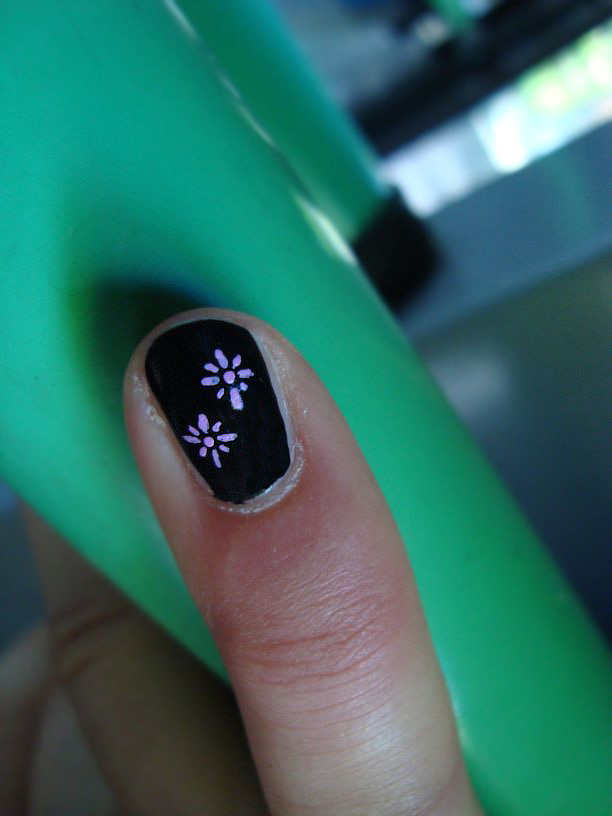
Despite the lack of updates recently, Dawn of the Lead is still very much alive – or undead. I’ve been busy with my kitchen renovation, and the only thing I’ve had time to paint is a few flowers for a certain lovely girl. Later this week or early the next I will be reviewing Foundry’s Hired Hitmen pack, and after that I hope to have things rolling smoothly once again.

I’ll leave you with a good tip on how to convince your significant other that something good can come from your weird, geeky little hobby.

DSC01287

h1

Warpg’s?

August 7, 2009

As I’ve written before, I’m not really that much into competitive wargaming – such as WHFB – anymore, preferring the narrative aspect of games instead. This is probably due to the fact that I’m a roleplayer at heart, having played RPG’s for 20 or so years compared to my 13 years of miniature gaming.

Every now and then I start toying with the idea of combining RPG’s with miniature wargames, and every time the whole process ends with no real conclusions, except for the fact that it’s pretty difficult to seamlessly integrate the two. The reason for this is the paradoxical nature of the problem, as what I’m basically trying to do is to remove the strict goal orientation from wargames and at the same time retain something of the game aspect in there as well. What I want, then, is a game you want to win and can win, but where winning is secondary to creating an interesting narrative with memorable scenes.

The problem this approach generates is that it easily makes either one or the other of the main components – miniature gaming and RPG’s – redundant. If you want a game you can win, you might as well play a full-blooded miniature game. If you want a narrative, why bother constricting your RPG with miniatures?

The current (4th) D&D edition combines these two elements, but in a way that’s not completely satisfactory. Basically whenever there’s combat, the game goes from RPGing to a very mechanical combat mode that is pretty much a grid-based miniature game. While this would suggest an actual combining of the two styles of game, it’s really more like two different games. When combat is entered, the characters often drop their personalities and become machines geared for optimally disposing of their enemies. This is all well and good, but simply alternating roleplaying and tactical gaming isn’t what I’m after.

How to make games tell a story? The obvious first answer is simply to insert some sort of story into whatever game you are playing.  It’s a valid point: To create a game with a story, we need a setting. I’m sure that a lot of miniature wargamers agree (they should!), that scenario-based games are usually more interesting than battles for battles’ sake. The scenario doesn’t have to be very detailed or even have a lot of effect in terms of game mechanics.  If there’s a rock in the middle of the battlefield, you can just state that you’re battling to claim that rock. What do you know, you have a scenario. Now while this is a step in the right direction, it will not carry the game on its own. Even if you call a game of chess the ultimate battle between good and evil, at its core it’s still a game of chess.

In addition to the setting, we need characters. This is pretty standard fare. A block of plastic soldiers isn’t nearly as interesting as the 43rd Colonial Marine battle squad under Lieutenant Harris. By giving characters, units and places names, you’re also defining them and suggesting that there is something more to them than what you see on the table. That’s where you’re evoking the imagination to fill in the blanks in the game/story.

Those two things are the prerequisites for a narrative game in my view, but they’re also only the starting point. Even if you do have your 43rd CM battle squad battling a horde of bloodthirsty xenomorphs on planet X336, you’re still just basically playing the same game as before. See the chess example, above. The question that now arises is how to differentiate this particular game from a hundred others, and this is where it gets tricky as we wander off into the grey area between miniature games and RPG’s.

Let’s look at this through an example. A lot of games feature some sort of mechanic for handling morale and reactions to killed companions etc. In my view this makes it too mechanical to have significant narrative impact, as basically a characters entire mental structure is compressed into a single characteristic. You roll a six and he’s a hero, you roll a one and he’s a coward. Why can’t you just decide whether he’s brave enough to stand fast or if he just runs away?

Because of the rules. The rules dictate what to do, and if you break them, the game is no longer fair. But fair to whom? As you’re striving to play a narrative wargame, you most likely are not playing against a complete stranger. What you’re trying to do is to have fun, not win by any means necessary. So my first real piece of advice in this article is

Don’t be afraid to change the rules.

The rules are there to serve you and to act as guidelines for resolving conflict situations in the game you’re playing. If they’re getting in the way of your fun, change them. You don’t have to throw them away, you don’t have to ignore them completely, tweak them and tamper with them a bit so that they suit your game better. Often you’ll find that there are parts of a rules system you don’t like even if the system is otherwise perfect. Solution? Simple. Just do away with the bit that doesn’t work and replace it with something more suitable.

This might seem like something so amazingly obvious that it doesn’t need to be said, but trust me when I say it isn’t. 13 years of playing WHFB and we still won’t change a rule without an official decree from GW. Why? We (sometimes unfortunately) play WHFB for its competitive aspect, so the rules are very important. You tamper with one, and you might put the whole thing off balance, which then would lead to it no longer being fair which in turn leads to everyone not having an equal chance at winning. And this elegantly leads to my next piece of advice, which is

Have fun first, try to win second.

This doesn’t mean you have to completely ditch the idea of winning, you just have to put it in perspective. As it’s summertime, I’ve played a lot of football with my friends and would love to see the mentality shown in those games transferred to wargaming. In our football matches it’s not really important who scores the most goals or which side wins. Nobody wants to ruin the fun by taking the whole thing too seriously. You’re probably not playing wargames for money, and most adults don’t need to build their self-esteem on winning in miniature games, so lighten up and have a bit of fun. Once you grasp this mentality, games will provide you with endless chances to create memorable scenes, from the noble knight’s heroic but doomed charge into the ranks of the enemy to the desperate hunter’s useless bullets against a werewolf. Often losing and going out in style can be just as, or more satisfying than winning.

It’s up to you how much emphasis you want to put on winning the game. If you want to retain some amount of competition in the game, you could assign different victory conditions and goals for different characters. You could create relationships between characters, making them act in a certain way (“He will always protect her”), or create rules to govern their actions in specific situations. The sky’s pretty much the limit.

The one thing you have to bear in mind is that in the end it depends a lot on whether players are willing to sacrifice victory in favour of a more interesting game. I’ve found that the more players like to do this, the better the games get. Correspondingly the more people tend to focus on winning, the drearier the games get. I could tell more than a few stories about glorious WHFB battles with mighty dragons, epic heroes and ancient wizards all hiding behind houses or inside woods so as not to risk giving your opponent victory points. Personally, that’s not something I want to see in my games.

I could go on and on with this. I mean, I haven’t even touched on narrated or GM-led games, cooperative gaming or unwinnable scenarios! Who knows, they might be the topics of a future post or three. I feel, however, that I’ve rambled on more than enough. To summarize the whole post, I’ll freely quote a friend of mine who I discussed this subject with.

“So, we make the rules malleable and optional, and there’s no real winner either? We could just as well be kids playing with toys.”

Indeed.

h1

A gamer or a collector?

July 16, 2009

These last few days I’ve been thinking about the following question:

Am I ever going to game all those scenarios I’m designing, or use the forces and gaming tables that I’m building for actual gaming?

For someone who’s invested a fair amount of money and time in collecting, putting together and painting a ton of miniatures and scenery, this might seem like a strange question. Surely all that stuff has been bought for a reason, and that reason is gaming. What use is a gaming table if it’s never played on? Why pick up two opposing forces if you’re not going to get some dice rolling? Good questions, indeed.

I was introduced to the hobby by my two older brothers, who were avid RPG gamers way back when the D&D red box was all the rage – it was even translated into Finnish – and who used to buy and paint all sorts of fantasy miniatures to use with roleplaying games. I was around 6-7 years old, and the little toy soldiers fascinated me. My brothers would paint them up, and of course I wanted to try that too. After I had dunked a mini or two completely in a jar of paint (I figured that’d be the quickest way to basecoat) they decided that I’d painted enough and would have to  wait a few years before trying again.

That few years turned into 6. I kept on playing RPGs and while I was familiar with miniatures, I didn’t see the use in buying them. If we needed miniatures to represent and clarify a combat situation, we’d dig into the old plastic box where my brothers’ more or less painted stuff was. Or we just used pennies or whatever we had at hand. And then I was introduced to WHFB. The stuff was like crack, and I was instantly hooked. It didn’t take me a long while to assemble my first army of miniature orcs and memorize all the fiction in the army book and the rules.  And the painting! I painted them slowly and meticulously, at a pace at which it must’ve taken me 4-5 hours for every single miniature, and looking back I can’t see where all that time went, the minis really aren’t much to look at.

Anyhow painting wasn’t the important thing. Painted miniatures looked better, sure, but it was the gaming that counted. We would spend hours and hours designing army lists that exploited every little loophole in the rules. If your opponent was bringing a knife, you brought not only a gun but slash-proof vest as well. If he had a unit that was immune to psychology, you brought a magic item that ignored psychology rules altogether. And so on and so on. Most of our armies were unpainted, and we used a lot of proxies. An empty base was a giant, a troll was an ogre and a dragon was a chariot. We didn’t really mind, as the painting and the miniatures themselves were clearly of secondary importance compared to the game itself.

Years went on. Armies grew and started to have more paint on them than before. The spirit of the games shifted in a friendlier direction, as new rules and slowly amounting maturity stopped the games from becoming simple tasks of army optimization. Slowly but surely narrative began to creep in. Units were not chosen solely for their combat prowess or special abilities, but for their flavour as well and themed armies started surfacing. The games were still competitive affairs, but now it was becoming more and more fun even when you were losing. It was – and is today – common for us to narrate whatever was happening with the rules, leading to some hilarious battles. It somewhat lessened the frustration of seeing your entire army devastated in two turns, too. The majority of our gaming group have always been RPG gamers first and wargamers second, which might explain our tendency towards narration.

With battles coloured with narration, the same narrative thinking started making its way to my painting as well. As I was painting a miniature I was wondering what his name was, and what the story behind him was. It was glorious to place a unit of such individuals on the table, and awful to see them swept away with a bad roll of the dice. I started to get the feeling, that the best part about creating a unit of miniatures wasn’t actually using them, but instead the process of painting them and giving them life through background stories and painted and modelled detail. It was like a doll house: creating an intricate model of a house for dolls becomes much more pleasing than actually playing with the dolls themselves.

When you combine a narrative mentality like that with my overall tendency for excitability for whatever I think is cool for the moment – mostly due to a book read or a movie seen – it’s no wonder that I tend to easily pick up a bunch of models for this or that genre, which I will paint up and not game with as I shift my attention to something completely different. Aliens, predators, colonial marines, vampires, werewolves, vampire hunters, werewolf hunters, zombies, zombie hunters, post-apocalyptic dragon hunters…you name it. Sure, I always think of all the good games I’m going to have using whatever miniatures I’m painting at the moment, but very rarely end up playing the games. They turn out much more fun when reality is not allowed to mess with good solid fantasy.

Where am I going with all this rambling? Maybe it’s just the question of me no longer seeing myself as a miniature gamer, but as a miniature collector or modeller instead. My approach to the hobby is starting to resemble that of the doll house enthusiast or the model railway hobbyist, as the process of building something and adding details and narrative to it is becoming more important than actually using the thing “as intended.”

As a roleplayer, however, I find the idea of blending RPGs and wargames intriguing. Could it be possible to retain the best elements of both and combine them into a seamless system sporting both the strong narrative element of RPGs and the strategic and gaming element of wargaming? That’s what I’m looking for in my gaming. If I ever manage to nail it, I’ll be sure to let you know. I’ll probably type up a full post one day when the mood strikes me.

Now, to answer the question presented at the start of this post:

Probably not. But with all the fun had with the designing, painting, building and all, it’s not really a big loss, is it?

Oh, and we’re having our annual WHFB summer bash in a week or so. Even with all the fancy-pants talk about narration, it’s always a special feeling rolling 20d6.